
The Expat Mindset
How the Pandemic & Rediscovering Stoicism Fueled My Expat Adventure

Editorial Note: Wandering Elsewhere reflects my personal, moment‑in‑time reflections on the world I encounter. Any reference to policy speaks only to how it shaped my feelings and choices, not a formal critique. I’m not a political expert — just a human navigating his life.
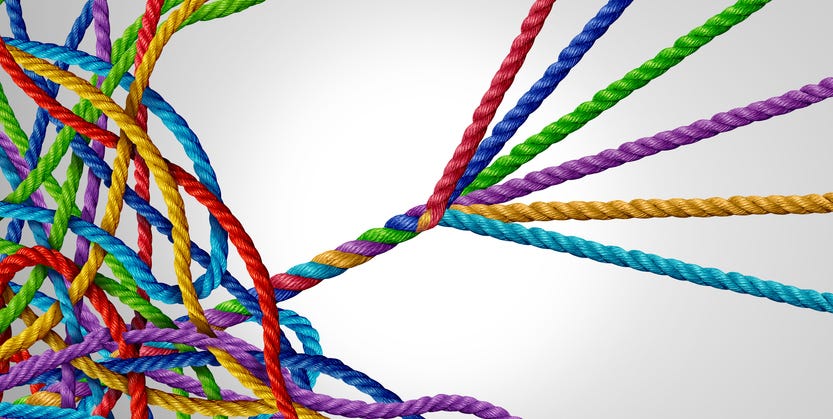
Sometimes beauty arises from chaos.
Introduction
The 2020 pandemic was a major planetary shift for everyone, and it was for my family, too. It tested relationships, broke cycles, and seemed to make people face what they were avoiding. It was lonely for many. The world got quieter.
The surreal empty streets, evidence of nature recalibrating in stunning fastidiousness – as if relieved we were gone, all too ready to fix what we have damaged. But we weren’t gone. We were having a reset, making sourdough, ordering from Amazon, wiping down our groceries, and searching for toilet paper. We were experiencing a collective, forced reset.
Do you ever dream of a reset? I admire the people who took the reset opportunity provided by the pandemic to shift their mindset from reactive to responsive. The difference can feel subtle. But it is not. A reaction is an uncontrolled emotion, a cause and effect, a genetically DNA encoded fight or flight response – often beyond our control. I look back now and understand that it was the “discipline” of a response I sought, which led me to rediscover Stoic wisdom.
In fact, it led my husband to the same place. We both ordered Marcus Aurelius’ “Meditations: Letters from a Stoic” from Amazon, only to discover this when one of us wondered why we had two copies of the same book.
The Illusion of Control
“Be like the rocky headland, on which the waves constantly break…” -Marcus Aurelius.
In 2019, when the news media began reporting on this virus in China, I paid little attention. But my husband was paying attention.
He quietly gathered data and formulated a plan. By January 2020, he advised me to stock up on household necessities. When the powdered milk and other supplies arrived, I thought he was overdoing it, but I didn’t say anything. He then bought food in bulk from Costco. Two weeks before the world closed, he ensured his staff had everything needed to work from home and sent them home two days before the shutdown. Then the world shut down.
I remember feeling like I was married to a genius; beyond being smart, he has deep emotional intelligence and personal discipline.
Many suffer from an illusion of control. We chose control over discipline; control feels more powerful, safer, but discipline is quieter. Discipline requires mastery of emotions and of our genetically encoded fight-or-flight response. Eventually, one finds that control is just an illusion, but the discipline of response is firmly grounded. The path forward requires a balance between them.
Why Stoicism Surged
Stoicism had become mainstream with many rediscovering it because of people like Ryan Holiday, who published, in 2014, his best-selling book, “The Obstacle is the Way.” By the time the pandemic arrived, stoicism had moved to the periphery of mainstream culture thanks to Holiday and others like him. Then its popularity soared. For many, learning about the Stoics in our higher education experience, this was a rediscovery.
The simplicity of Stoic wisdom, for me, is this: life will make you uncomfortable, and that’s okay -you can handle it. “Memento Mori.” Someday, you must die. So, if it’s happening, life will continue, and the only question is, do you react and bring more pain, or do you respond with discipline? Can you train yourself to practice Amor Fati, to love your fate? And finally, will you do the work of happiness each day by approaching your life with virtue, love, the discipline of gratitude, and care for yourself and others?
Unlike organized religion, which mostly concerns a human bastardization of the works of enlightened historical figures, there is no obstacle to embracing this philosophy. Becoming a student of stoicism involves your commitment to do the work of learning, pondering, and practicing. Stoicism soared because participation in it does not require fitting through the tiny hole of a sewing needle, while its practitioners scream at you.
The rediscovery of the stoics were invaluable to me during the pandemic. Anxiety and anger existed that no amount of alcohol could fix. Stoicism became a healthier alternative to dangerous self-medication practices and coping mechanisms provided by alcohol. After the kids went to sleep, the bottles came out, what at first was something I laughed about, became something I knew I needed to replace before it became a problem. Can anyone relate? None of it was healthy, none of it could last in practice, and none of it helped in any way. Stoic wisdom was the healthy self-medication practice that I, and likely others, needed.
When Crisis Hits
All of this sounds a bit “Kumbaya” for sure, but bear with me. How exactly are we supposed to respond without reacting?
Do these three things:
First,
“Revert at once to yourself,” a bit of wisdom from Marcus Aurelius. When facing challenging times, it is critical that you safeguard your inner peace. One step is to put your smartphone away. Get grounded each morning with who you are, what you believe, and your ability to face each day with intention. This might look like repeating your favorite mantras. Here are some of mine:
All is well, I am safe.
The universe is unfolding for my greatest good.
In these moments, I express my gratitude for all I am thankful for by listing each thing.
Next,
“Seek calm, not control.” I am honestly not sure where I got this bit from. It could have evolved from any number of sources, including Viktor Frankl’s “Man’s Search for Meaning,” any of the works by Kahlil Gibran, or any number of Stoic writings, including Plato’s “The Republic.”
Sometimes we feel too self-indulgent at times of great stress and sudden disruption. Especially if we have other people or animals to care for. On a commercial airline, the flight attendants instruct you to put on your own oxygen mask first before helping minor children. This is sage advice. Safeguarding your safety, calm, and inner peace is what gives you the strength to endure.
You know what works for you. What brings you calm and inner peace? (Share in comments). Develop a routine and stick to it, especially when life gets tough.
Finally,
“Tighten opinions but lose certainty.”
During the pandemic and stressful times, we can lose self-discipline and calm, turning to doomscrolling, ragebooking (Anger + Facebook), or commenting as emotional outlets. However, these actions destroy peace by offering an illusion of control, like self-medicating with alcohol, weed, or other vices. Instead, we should seek calm and do what supports strong neurological health through exercise, healthy living, and higher-vibration thinking, focusing on love, gratitude, and wisdom, all of which positively shift outcomes.
I like to think of it this way. Imagine you are skiing down a beautiful but dangerous mountain path through trees. You have two options: focus on “don’t hit a tree” or “find the path.” Which one helps you survive?
Hint, if you said, “don’t hit a tree.” You either have a cynical sense of humor, or you missed the point.
When a crisis hits, find the path.
What Stoicism Gets Right (And Wrong)
For me, stoicism works because it gives me a roadmap and a way to think, to remain calm, present, and to proceed in a way that aligns with the values and virtues I embrace.
Stoicism veers off the deep end when taken out of context. How do you love your fate when you lose a loved one to cancer? How do you stay in the moment when your world is crumbling around you, and you feel overwhelmed? How do you not explode in a rage when injustice hits too close to home?
The reality is that divinity, whether it comes from religious practice, stoicism, or some other format, is just a way for your soul to evolve. Imperfect as any of the vehicles which lead to divinity are, it’s good to be in one. But when your path to divinity and self-actualization depends on the exploitation, invalidation, or unequal treatment of others, you have lost your path
Imagine the Worst: The Best Coping Mechanism
“Premeditatio Malorum,” a Stoic philosophy popularized by Seneca the Younger in his work, “Moral Epistles,” offered an approach to facing your fears by imagining the worst to be prepared for the possibility of that outcome. Today, some might think of this as hyper vigilance, but it is not meant to be. When practiced deliberately and thoughtfully, the concept proves powerful.
First, our greatest fears rarely come true; imagining what we would do is a reminder of this, and the resulting plan can be empowering if you allow it. Set it and forget it.
Taking time each day, particularly when you are facing a crisis, to imagine the worst outcome, remind yourself it will likely not happen, and come up with a solution or course of action, reclaims your agency over the situation.
As an attorney, my litigator husband has had profound success using this approach to address potential case outcomes. It is a tool he has taught me over the years, and I have found it most helpful in navigating my response to what life offers.
So much of how we react to life stems from childhood injuries. I know this about myself and from observing others. From the loss of my father to cancer when I was nine, to the reality of being gay, to my frustration with my equality being up for a vote in America with every election cycle, I have learned that when I react to crisis through the lens of the injured child I was, I fail in life. I have observed this phenomenon in others as well.
But developing an approach to crisis, to living boldly, while confronting challenges has delivered a life I love, both empowering and filled with gratitude.
Living a bold life is not for the faint of heart. Choosing courage over catastrophising is better every single time.
Everyday Stoicism for a Borderless Life
Moving countries is the epitome of living a big, bold life. Choosing courage when you hit a snag on this big, bold adventure is a fuel that will drive you forward.
Here is a short checklist to help when life happens:
Clarify what is in your control.
Embrace discomfort; it’s the cost of recalibrating your life.
Stay away from your smartphone. Practice your mantras instead, and reset your brain so it aligns with positive momentum rather than a downward spiral.
Look for the path.
Express gratitude for the higher-vibration emotions: the love you have and give, the courage you have witnessed or expressed, the evolution of you and those you love, the kindness you have expressed, experienced, or witnessed, and the appreciation for your good mental and physical health.
Conclusion
The world continues to evolve, as does humanity. It is a privilege to live in this moment and to witness the events of the day, even when they break you. Calm is not the absence of waves; it is learning to stand where they break, without falling, or drowning, or breaking too.
If this resonated, please subscribe to Wandering Elsewhere or follow. Has a bit of stoic wisdom helped you in your life? I would love to hear about it. Please share in the comments.
For those considering relocating abroad, visit our website for more information and resources. WWW.GlobalWealth360.Com.